
Sometimes I sit down to pray and know I’m feeling something, but I don’t quite have the words for it. I may know that I’m stressed or overwhelmed, but there is more going on beneath the surface.
Am I afraid? Disappointed? Lonely? Do I feel overlooked, discouraged, or uncertain?
One tool I use in my own prayer life is a feelings wheel. It helps me slow down, identify what I’m feeling, and bring those feelings honestly before God.
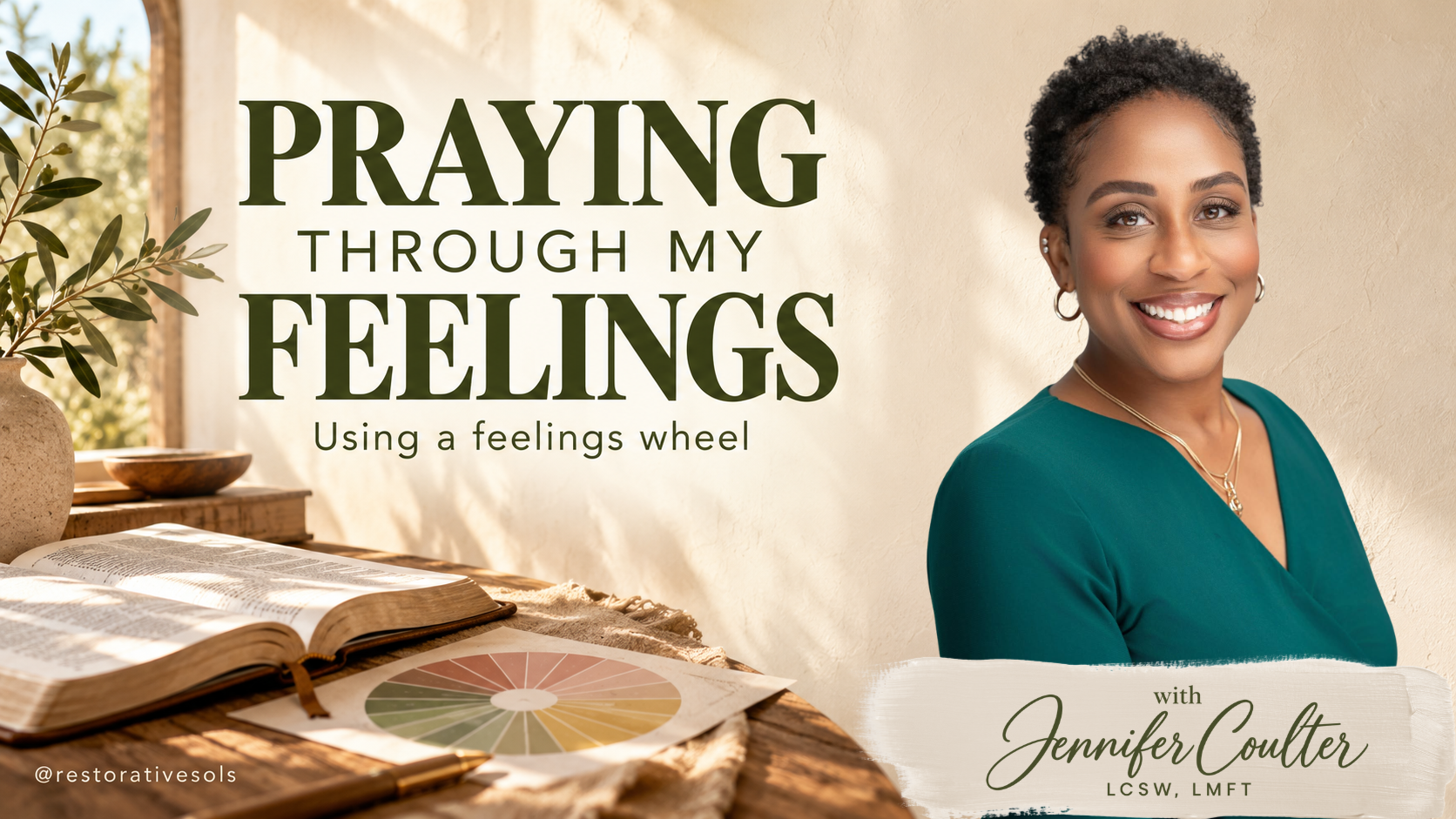
In the video below, I share how I use it and how you can try this practice for yourself.
What is a feelings wheel?
A feelings wheel is a visual tool that offers words for different emotions. You can begin with a broad feeling, such as sadness or fear, and explore more specific words that describe your experience.
You might start with “I’m upset” and realize that “I feel rejected” or “I feel disappointed” better captures what you are carrying.
Those words can give you a place to begin praying. You don’t have to explain everything perfectly or understand exactly why you feel the way you do.
There is room for your feelings in prayer
Throughout the Psalms, we see people bringing grief, fear, frustration, longing, and joy before God. Their prayers give language to experiences we sometimes struggle to express ourselves.
I find comfort in knowing that God already knows what is happening within me. First John 3:20 reminds us that God is greater than our feelings and knows everything. I can come to Him while I am still trying to understand my own heart.
Using a feelings wheel helps me become more specific about what I want to bring into that conversation.
How to use a feelings wheel in prayer
1. Identify how you are feeling
Take a moment to look at the feelings wheel. Notice which words describe your experience, then complete this sentence:
I feel / I am feeling __________.
Write down as many feelings words as you would like. You may feel grateful and worried, hopeful and disappointed, or several things at once.
2. Notice what may be contributing
If you would like, jot down some of the reasons you may be feeling this way.
Perhaps you are worried about bills, navigating a difficult relationship, feeling pressure at school, or waiting for something that remains uncertain.
You can use this sentence:
I am feeling this way because __________.
And if your answer is “I don’t know,” you can bring that to God, too. Understanding every part of your experience is not a requirement for prayer.
3. Find a scripture that connects with how you feel
Look for a scripture that speaks to what you are experiencing. You can use a concordance, search online, or look through the topical guide in the back of your Bible.
Read the surrounding verses so you can understand the passage in context. Notice what it reveals about God, His care, or how you might respond to what you are facing.
Write down as many scriptures as you would like. You may find it helpful to stay with one passage and return to it throughout the week.
4. Begin praying the scripture to God
Begin by acknowledging God, then bring your feelings to Him. You can thank Him for who He is, name what you are carrying, and use the scripture to help shape your prayer.
For example, a passage about God’s care might lead you to talk with Him about a worry you have been holding. A passage about His presence might help you express loneliness and ask for comfort.
Let the words become part of an honest conversation with Him.
A prayer to help you begin
Lord, I thank You because You are the God who sees me. You know all of my thoughts, even the ones I cannot put into words. Your Word reminds me that You are greater than my feelings and You know everything (1 John 3:20, NLT).
I come before You now because I am feeling __________.
I am feeling this way because __________.
Your Word says __________.
Take a moment to pray the scripture in your own words.
I am asking You for peace concerning __________.
I thank You, Lord, and I love You. In Jesus’ name I pray, Amen.
You can adapt this prayer to what you need to say. You may want to ask for wisdom, comfort, courage, help, or the ability to take your next step.
Give yourself room to be honest
You may finish praying and still feel some of what you felt when you began. That does not mean you prayed incorrectly.
This practice gives you space to notice your emotions and bring them into your relationship with God. Some days, you may have a lot to say. Other days, your prayer may simply be, “Lord, I feel discouraged, and I need Your help.”
You can begin there.
Resources for your prayer time
Free feelings wheel: Explore the feelings wheel
Purchase a feelings wheel: https://tinyurl.com/568ynr3n
Jennifer Coulter, LCSW, LMFT, is the founder of Restorative Solutions, where she helps people restore connection to God, themselves, and others.